When I look back at my trading journey, it almost feels funny now — but at that time it was nothing less than chaos, sleepless nights, and health issues. Many people see trading as an easy way to make money, just like I did in the beginning. But the reality is very different. Trading is not hard because of some magical chart pattern or hidden indicator. It’s hard because of the phases you have to go through, the discipline you must develop, and the patience required before things finally click.
This is my story of moving from a lucky beginner to someone who finally found a real edge.
The Illusion of Easy Profits
When I first started trading, I thought it was going to be easy. In fact, my early days were fueled by sheer luck and the advice of YouTube gurus. I wasn’t learning any technical concepts, nor was I trying to understand why the market moved. I was just pressing buttons and feeling like a genius whenever a trade went in my favor.
But luck has a short expiry date. Slowly, the bloodbath began. Month after month, I was losing. Yet every few months, I convinced myself, “This time, I’ll be profitable.” I thought if I just watched one more video, added one more indicator, or followed one more “expert,” things would change. But it was just an illusion — one that kept breaking me over and over again.
Looking back, I wish I had started with the basics, like properly understanding candlesticks, timeframes, and chart layouts. That foundation would have saved me a lot of wasted months.
The Painful Reality Check
Losses alone don’t make trading hard. It’s the emotional baggage that comes with it. I faced nights filled with doubts, stress, and tears. Yes, I actually cried at times. Sleepless nights became common, and my health started to deteriorate. The stress level got so high that I developed diabetes.
People think diabetes is about consuming too much sugar — but in my case, it was a lifestyle disease caused by mental pressure and imbalance. Thankfully, I’ve reversed it now through discipline and lifestyle changes. But back then, trading was literally killing me from the inside out.
That was my first real lesson: trading isn’t just numbers on a screen. It impacts your mind, body, and lifestyle in ways you can’t imagine.
Why Trading Takes Time: The Phases
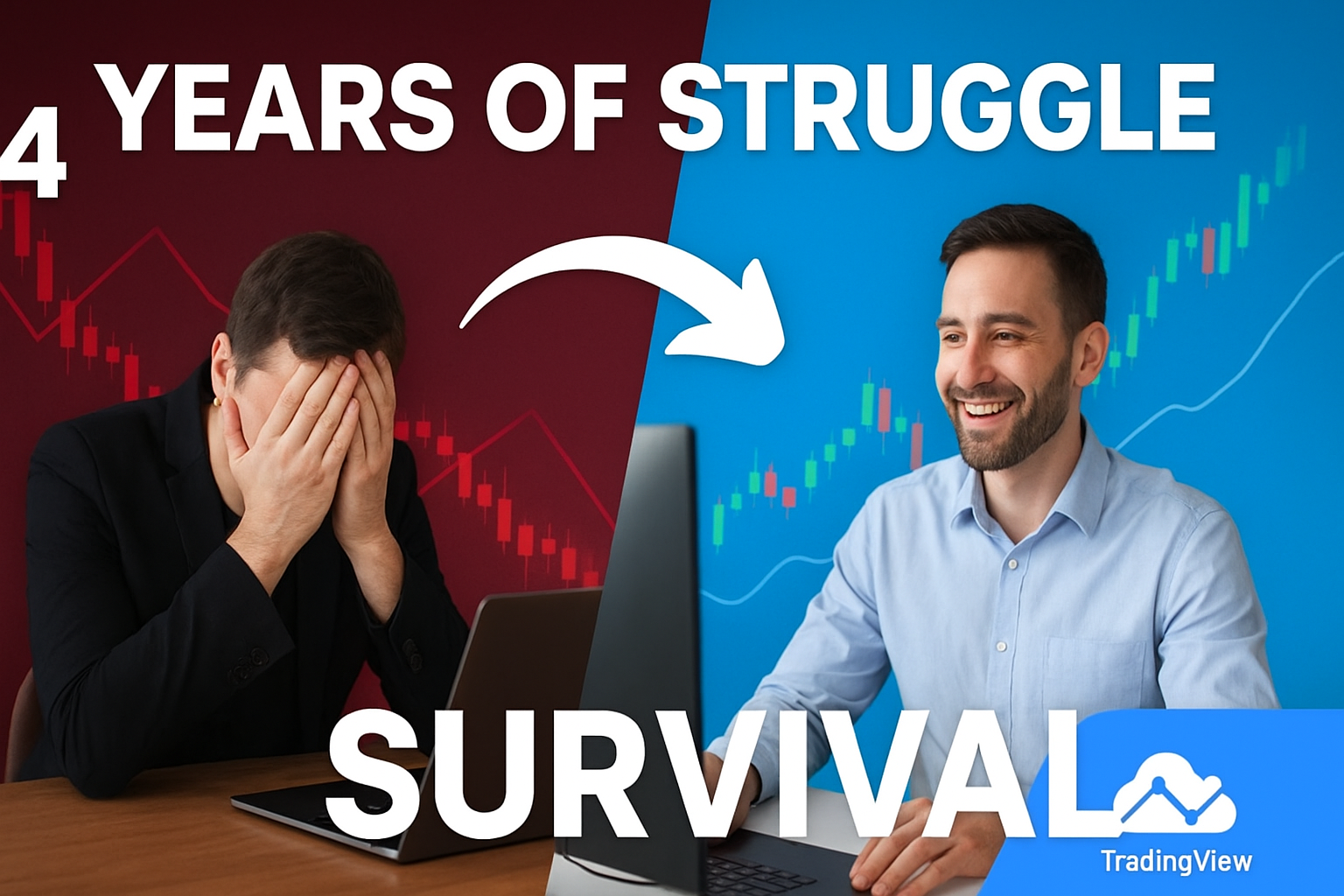
Looking back, I realized trading is not just about “struggling” — it’s about going through phases. If you want to move from point A to point B, you can’t skip the pain. You can’t shortcut the nights of doubt, the pressure, or the financial bloodbath.
For me, the phases went something like this:
- Year 1: Gambling. I was just clicking buttons, following gurus, hoping luck would favor me.
- Year 2: Technicals. I began learning indicators, chart patterns, pivot points — all the basic tools traders talk about.
- Year 3: Psychology. I realized trading is not only technical. Fear, greed, FOMO — these emotions were controlling me.
- Year 4: Edge. Finally, I understood: knowing technicals isn’t enough. Psychology isn’t enough either. What I truly lacked was an edge.
And this is where most traders get stuck. People know pivot points, moving averages, MACD, Bollinger Bands, RSI, and dozens of other tools. But they don’t know how to create a consistent edge from them. That’s why more than 90% of traders lose.
If you want to explore how pivot points actually work on real charts, I’ve explained it in detail in my post on how I use pivot points on TradingView. Understanding pivots was a key milestone in my own journey.
The Most Undisciplined Stage
My most inconsistent years were when I was experimenting. I was overtrading, chasing every move, and living with constant FOMO. I always had pivot points as my core concept, right from the beginning. But I kept thinking, “Maybe I need something more to make it work.”
So I tried everything: moving averages, Bollinger Bands, MACD, RSI, and more. Every time I thought, “This is the missing piece.” But it never worked. This phase was full of indiscipline — hopping from one setup to another, never giving anything time to mature.
The turning point came when I combined pivots with volume. That’s when the charts started to make sense. I could finally see why the market was moving, why breakouts worked or failed, and why sideways markets existed. Volume was the language behind the price action, and once I learned to read it, everything started to change.
If you’re curious about pivots, I recommend reading my complete pivot point trading guide. It’s the same framework that helped me make sense of my own inconsistency.
Slowly Connecting the Dots
There was no single “light bulb moment” for me. Instead, it was a combination of realizations. When I understood how to read volume, I began projecting the strength of trends. I started marking high-volume and low-volume zones.
But even then, I felt the lack of a true edge. So I became obsessed with finding one based on my understanding. I stopped chasing random setups and began trading the same patterns repeatedly. Over time, those patterns became my core setup — my strategy.
This was the phase where things finally started to click. Consistency didn’t come from a holy grail. It came from repetition, observation, and discipline. Slowly but surely, the dots connected.
How I See Trading Today
Today, my perspective on trading is very different from my beginner self. I see how people get excited after one good month or one good quarter. They think they’ve cracked the stock market’s secret and are destined for success. But that’s not how it works.
Trading is like becoming a doctor, an engineer, a lawyer, or building a real business. It requires 3 to 5 years of consistent practice, mistakes, and growth before you even start feeling stable. It’s a professional training ground where you must work on multiple aspects — technical skills, mental resilience, physical health, and even personal discipline.
Most importantly, I now see trading as a boring, hardworking, everyday job. Not the glamorous “15 minutes a day for a lavish lifestyle” that influencers sell. It’s about saving capital, managing risk, staying disciplined like an athlete, and respecting the process.
Trading is not entertainment. It’s a business. And like any business, you must earn it before it takes everything away from you.
Why Is Trading So Hard?
If I had to sum it up in one line, it would be this:
👉 Trading is so hard because it demands professional-level discipline, patience, and self-mastery long before it gives you consistent rewards.
You can’t skip the phases. You can’t cheat the process. Every sleepless night, every failed system, every emotional breakdown — it’s all part of the journey. If you survive it, you come out stronger. If you don’t, trading will eat you alive.
The only way forward is to accept the pain, learn from each phase, and keep connecting the dots until your edge and discipline align. That’s when the hard becomes worth it.
Final Thoughts
When I look back now, I don’t regret those years of bloodbath and struggle. They were necessary phases that shaped who I am as a trader today. Without them, I wouldn’t have discovered my edge or built the discipline I have now.
So if you’re struggling in your trading journey, remember this: it’s not about skipping the pain, but about enduring it. Treat trading like a profession, not a shortcut. Save your capital, protect your health, stay disciplined, and give yourself time.
Because in the end, trading isn’t hard because of the market. It’s hard because it forces you to transform yourself before you can succeed.