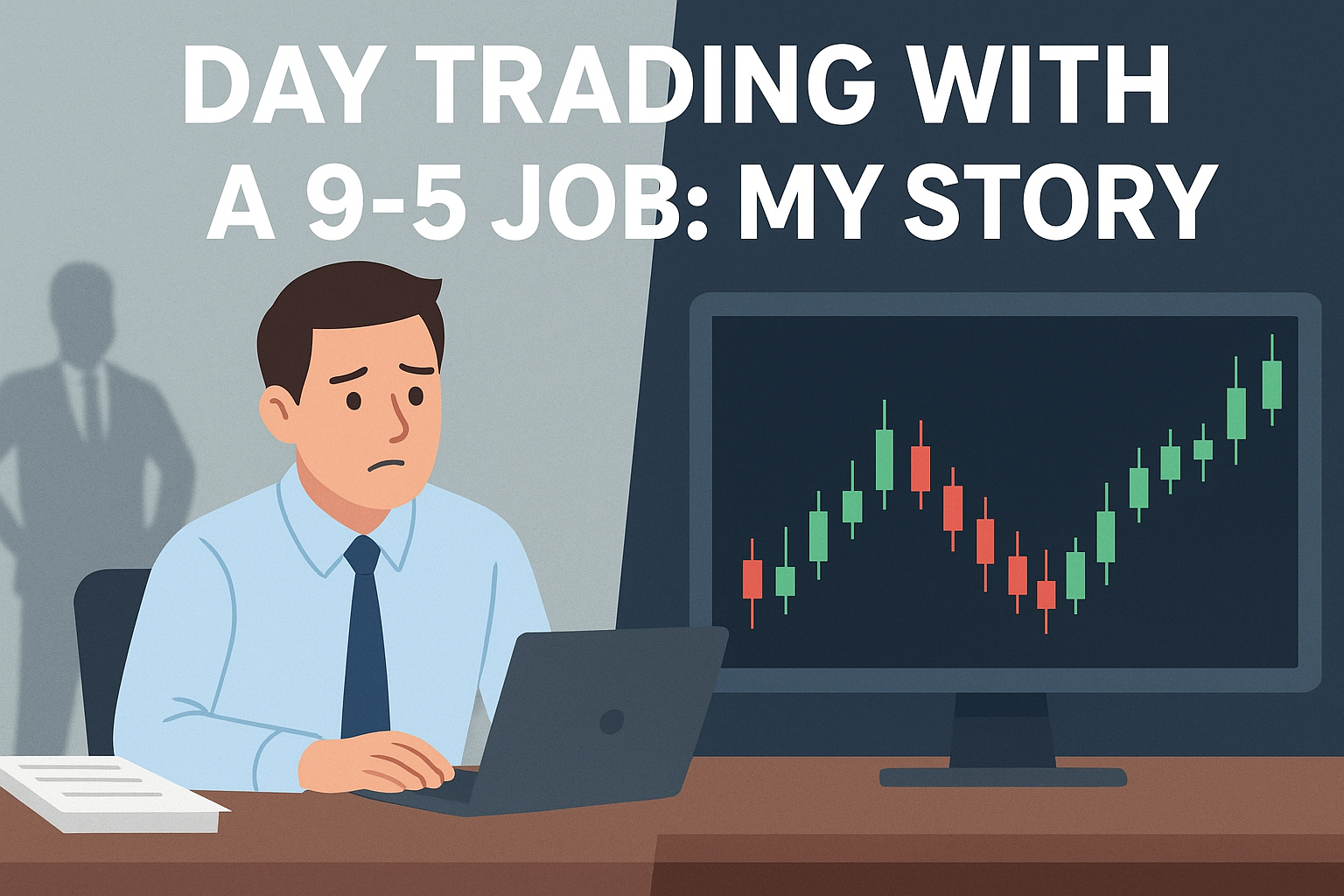
When I began my trading journey in 2021, I was a complete beginner with ambitious goals. Like many new traders, I thought the key to making money was to stay glued to every news headline, every YouTube video, and every market update. I would wake up, turn on the TV, scroll endlessly through videos, and feel a rush of excitement every time I heard something that sounded promising.
The Excitement Trap: My Early Days in 2021
If a channel said a stock was breaking out, or a YouTuber spotted a “perfect” head-and-shoulders pattern, I felt an instant urge to buy. And when the price moved even a little in my favor, I would take profits immediately, often out of fear or excitement rather than any logical plan. There was no structure, no proper entry or exit rules—just random decisions driven by what I saw in the news or online.
Blindly Following Patterns: My First Mistakes
At first, it felt like I was learning. Every day brought new trades, new patterns, and a sense of progress. However, I soon realized that excitement can be deceptive. I was reacting, not trading. I was chasing information, not understanding the market.
Some of the biggest mistakes were tied directly to blindly following these “expert” calls. I remember seeing videos where someone pointed out a head-and-shoulders pattern or a stock approaching the 200 SMA. I would immediately jump in, thinking it was a clear setup. Only later did I understand that patterns mean little if you ignore the bigger context. A head-and-shoulders in the middle of a yearly trading range can be a trap. A stock approaching 200 SMA while in a long-term downtrend is more likely a selling opportunity than a buy.
The Painful Wake-Up Call: Mid-2022 Losses
The turning point in my journey came around mid-2022. After nearly a year and a half of a bull market, many of the stocks I held went into a deep pullback that lasted months. I vividly remember holding stocks that had fallen 15–20%, following the advice of someone I trusted online, who told me to hold until the price returned to my buying level. My patience ran out, and I exited with huge losses. Almost 90% of the positions in my portfolio were red.
That painful period was a wake-up call. For the first time, I realized that my earlier “successes” weren’t because of skill or strategy—they were the bull market carrying me. I needed a real system, something grounded, repeatable, and understandable. That’s when I discovered Pivot Points, and my approach to trading began to change.
Pivot Points: The Discipline I Needed
Pivot Points gave me structure. They showed me where to enter and where to exit, helping me stop making random trades based on fleeting excitement or news. Of course, at first, it felt simple—but nothing in the stock market is truly easy. Even with pivots, I had to learn the advanced concepts, understand market context, and study how professional traders use these levels. I started reading books written by traders who had mastered Pivot Points, learning not just the lines on a chart but the reasoning behind them.
Through this learning, I understood a fundamental truth: for swing trading, news is mostly noise. It doesn’t create an edge unless you’re trading intraday volatility. Swing trading is about patience, structure, and pattern recognition. It’s about knowing where to buy, where to sell, and how to manage risk over days or weeks. Randomly chasing headlines will only distract you from developing a real system.
The Takeaway for Beginners
If I could give one piece of advice to beginners: stop thinking you need to follow the news constantly. Focus on your setups, understand the market structure, and develop discipline. Use tools like Pivot Points or any method that provides clarity and rules, not hype. That’s where the real edge comes from.
Through my journey, I realized that mastering Pivot Points is the key to structured, profitable swing trading. If you want to learn exactly how to calculate Pivot Points and apply them effectively in your trades, check out my detailed guides:
Looking back, the losses, the confusion, and the false excitement were all necessary. They taught me the value of discipline, context, and structured thinking. Today, I trade based on setups, not news, and I have a system I trust. And that, more than any headline or tip, is what makes swing trading work.
Cheers!!
Arup MSP
Creator of Pivot Mastery (The Practical Way to Understand Market Context)
Follow on X – https://x.com/MSP_Traders